Neutralisation
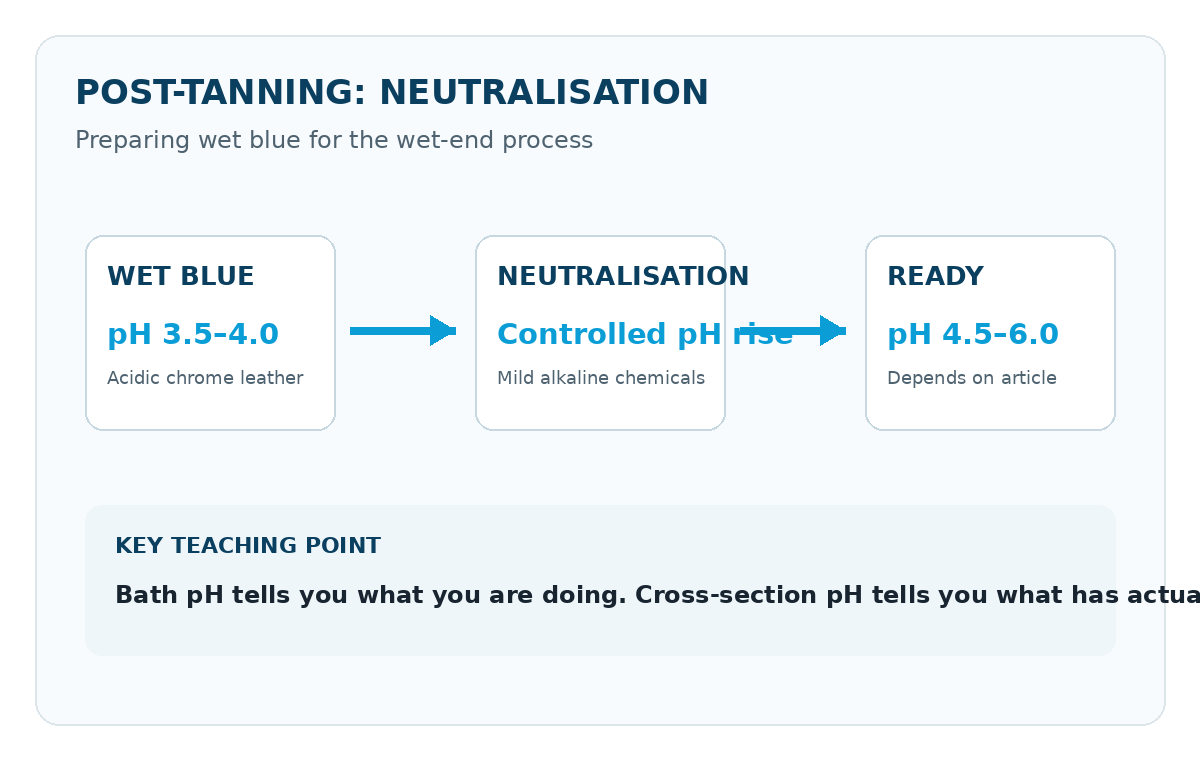
Wet blue starts acidic. The pH is raised gradually to an article-dependent target, with bath and cross-section measurements used together.
LEATHER MANUFACTURE
Understanding how wet blue is transformed through neutralisation, retanning, dyeing and fatliquoring.
FROM WET BLUE TO THE WET-END
After shaving, chrome-tanned leather has a uniform thickness but its chemical condition is not yet suitable for the next stages. This material follows the leather through the connected wet-end sequence rather than treating each operation as an isolated recipe.
Neutralisation prepares the leather by raising pH in a controlled way. Retanning then modifies structure and properties, dyeing develops colour through the cross-section, and fatliquoring lubricates the fibres to create softness and flexibility.
A LOOK INSIDE THE MATERIAL
Wet blue starts acidic. The pH is raised gradually to an article-dependent target, with bath and cross-section measurements used together.
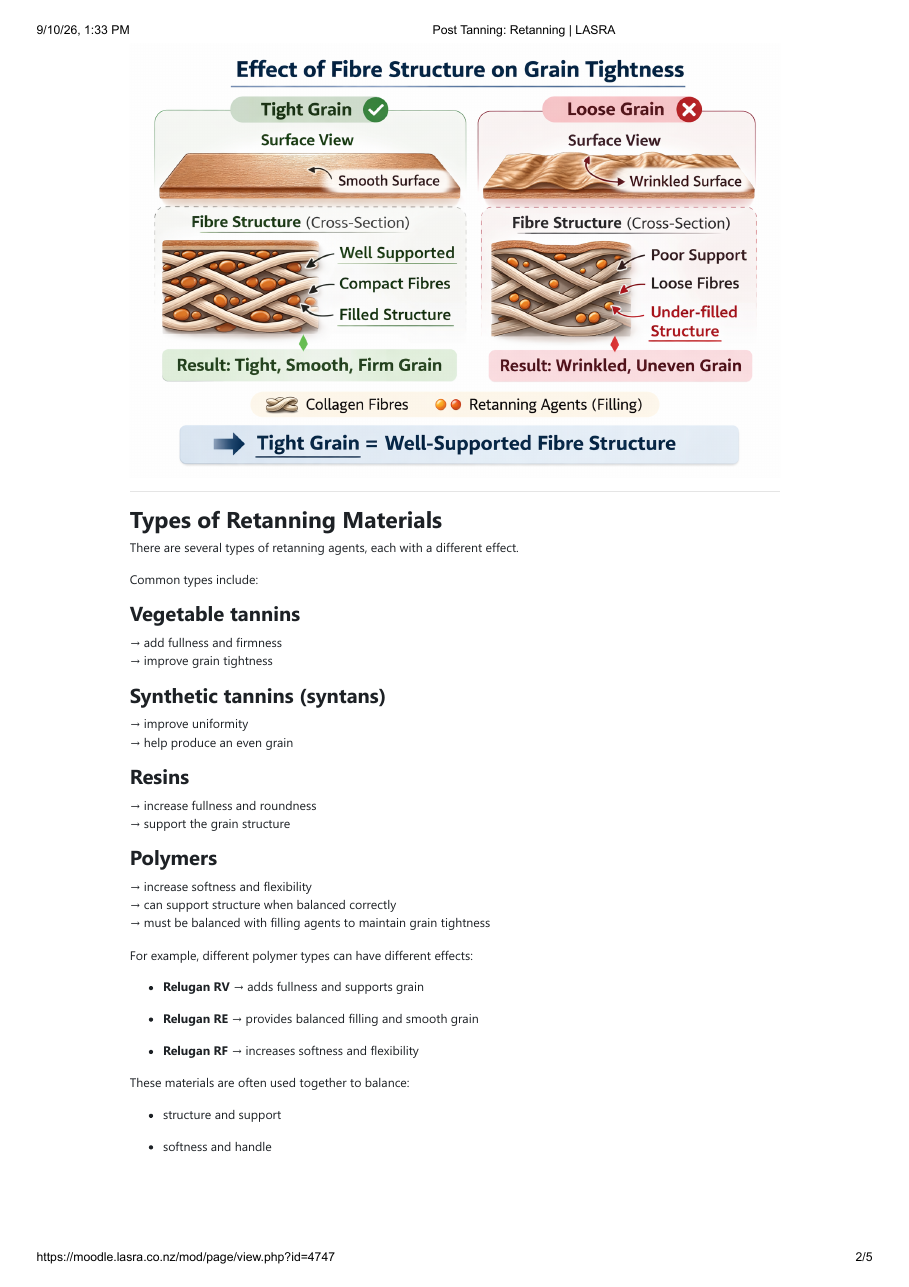
Different retanning systems change fullness, softness, grain tightness and handle by modifying and supporting the fibre structure.
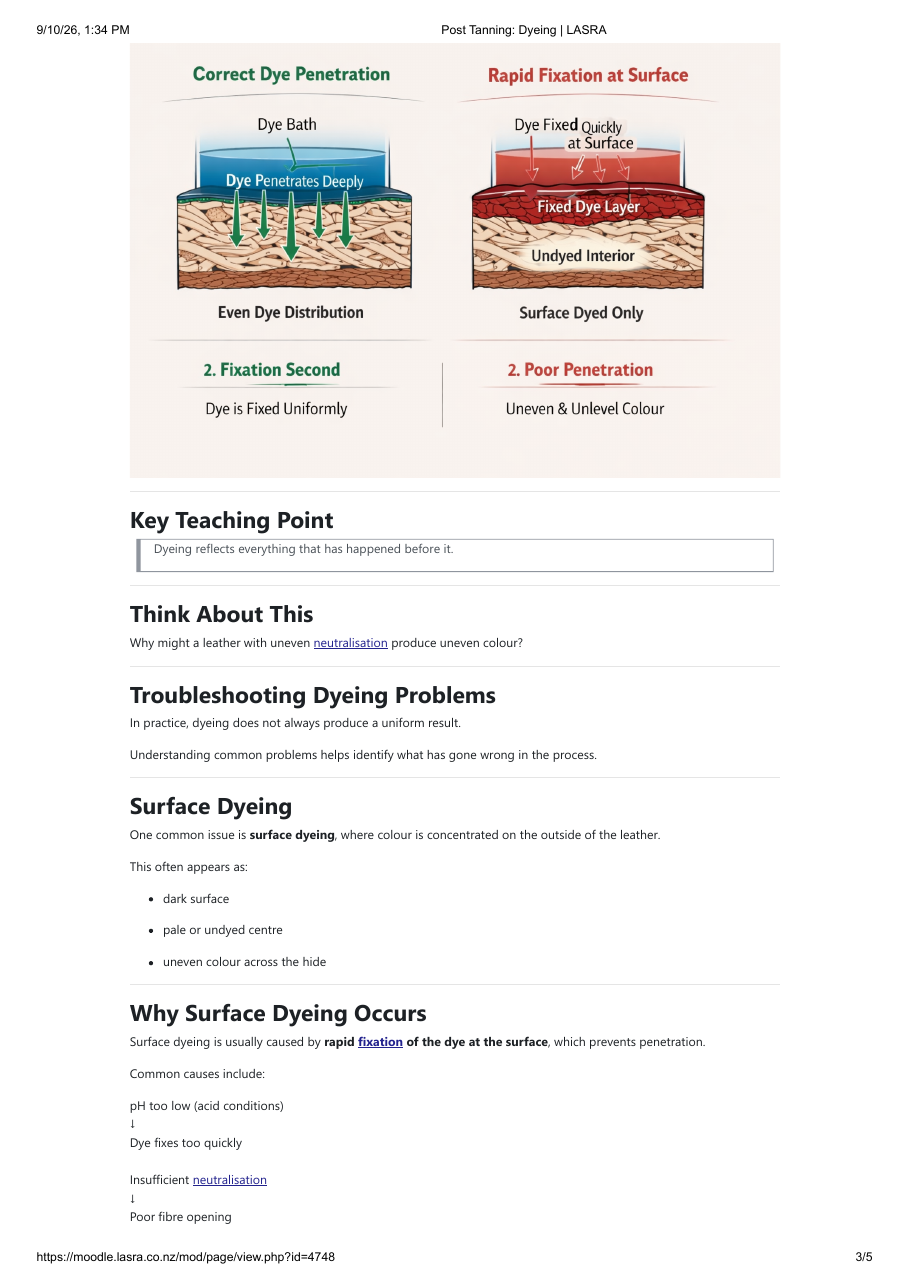
Good dyeing requires penetration before fixation. Uneven colour can reveal problems created much earlier in processing.
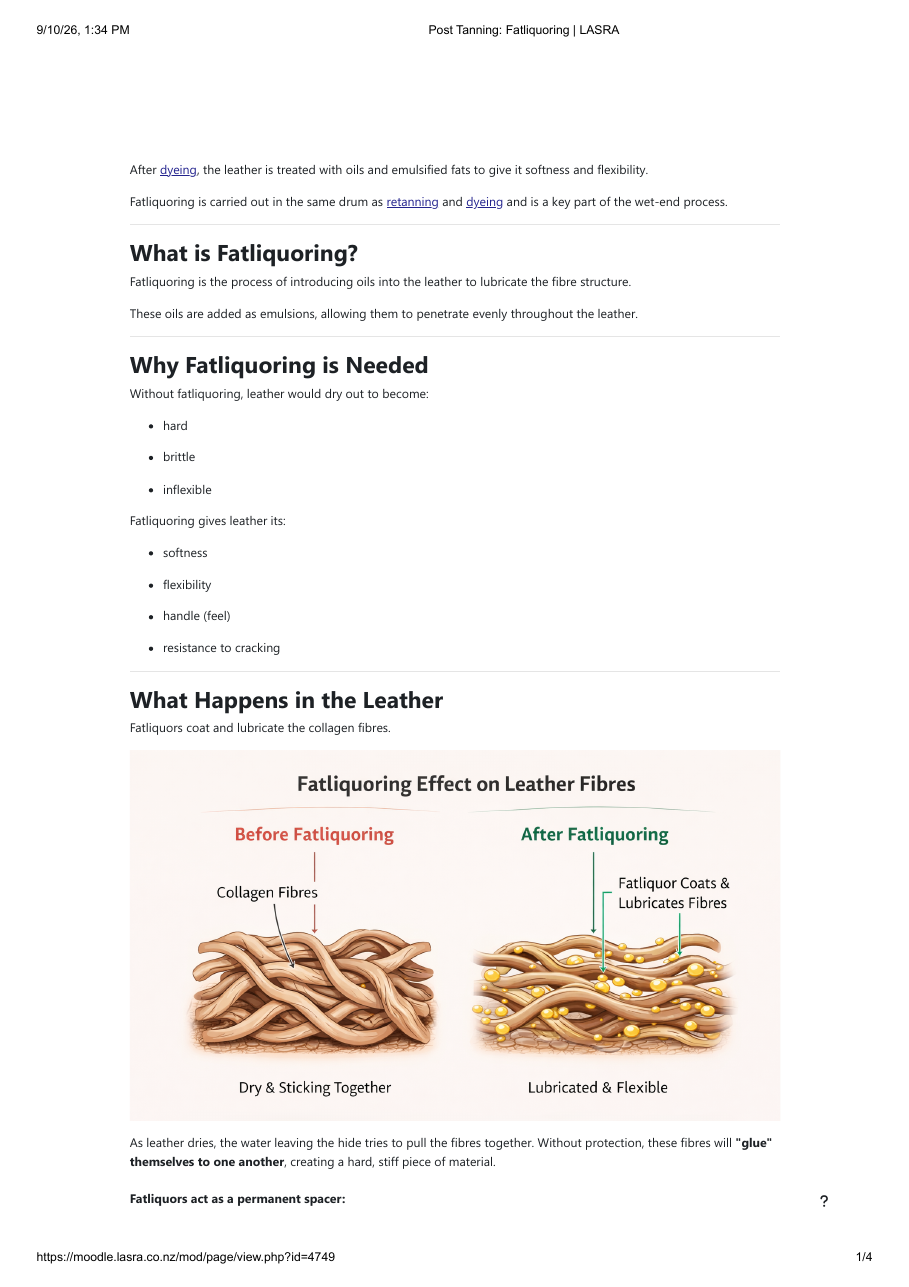
Fatliquors coat and lubricate collagen fibres so they remain able to move after drying, producing softness and flexibility.
The important lesson is the connection between stages. Neutralisation controls uptake; retanning changes structure; dyeing reflects the condition created by earlier processes; and fatliquoring builds on everything that has gone before. Operators therefore learn to interpret process conditions rather than simply follow additions on a recipe.