Understanding Hides & Skins
A practical introduction to hide structure, collagen, species variation and raw-material faults.
TECHNICAL LEARNING RESOURCES
Selected public training material, technical references and examples from LASRA's developing Fundamentals programme.
SHORT TECHNICAL COURSES
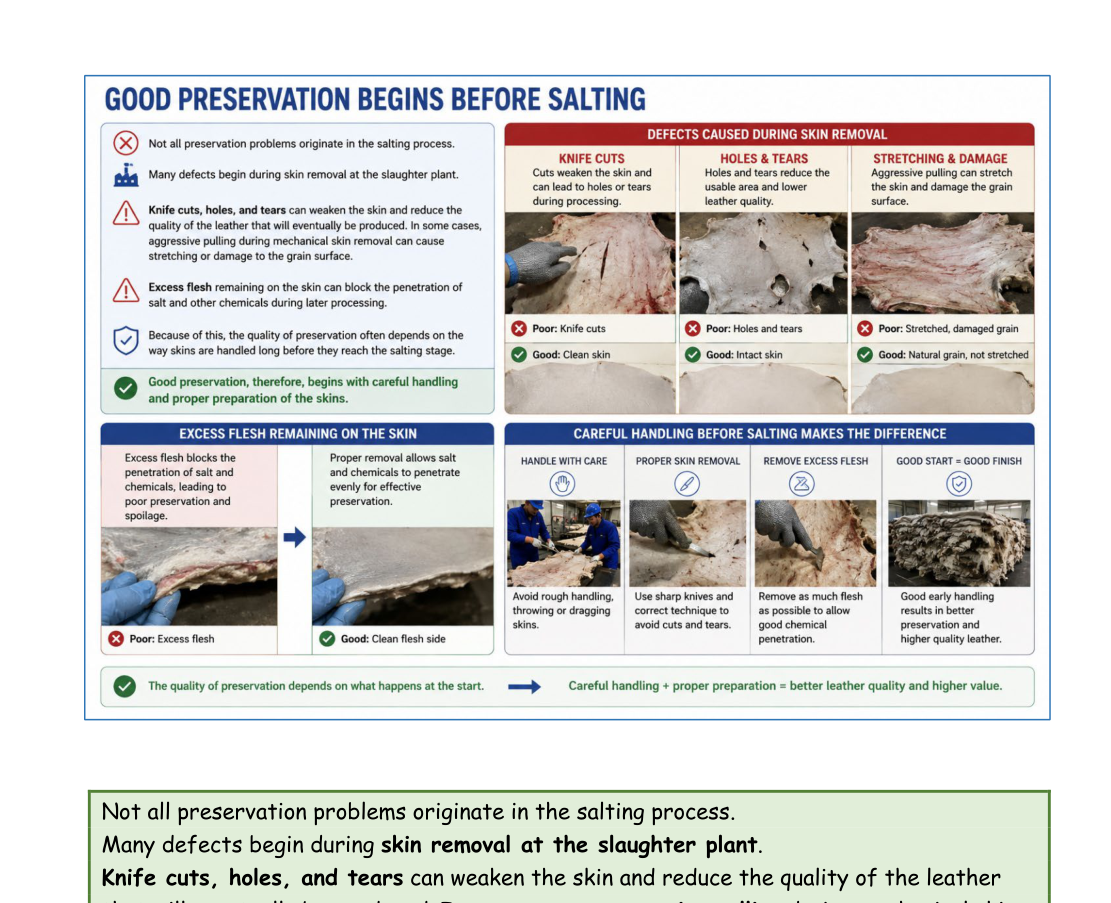
A practical course following the calfskin from early handling and preservation through drum salting, drainage, grading, packing and storage.
Learners see not only what operators do, but why preservation works, how temperature, moisture and time affect deterioration, and how early handling can influence final leather quality.
View course summary →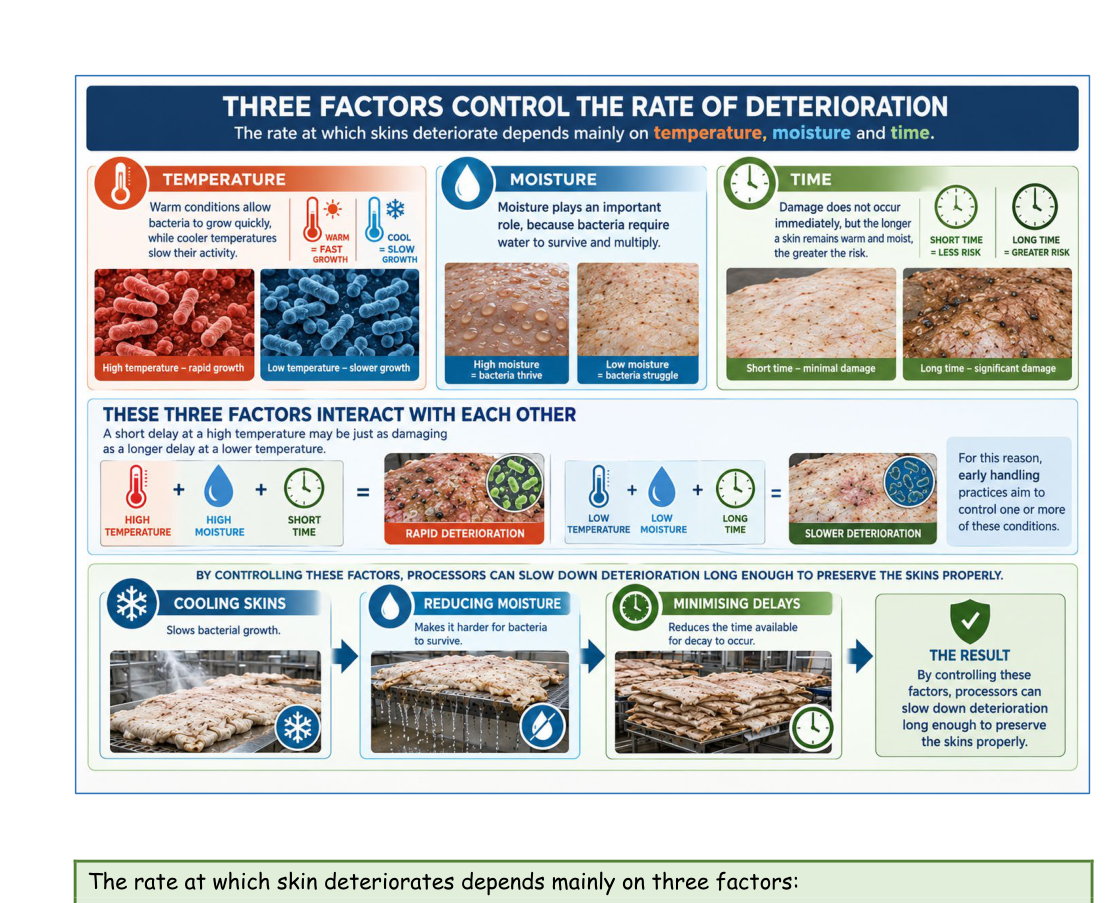
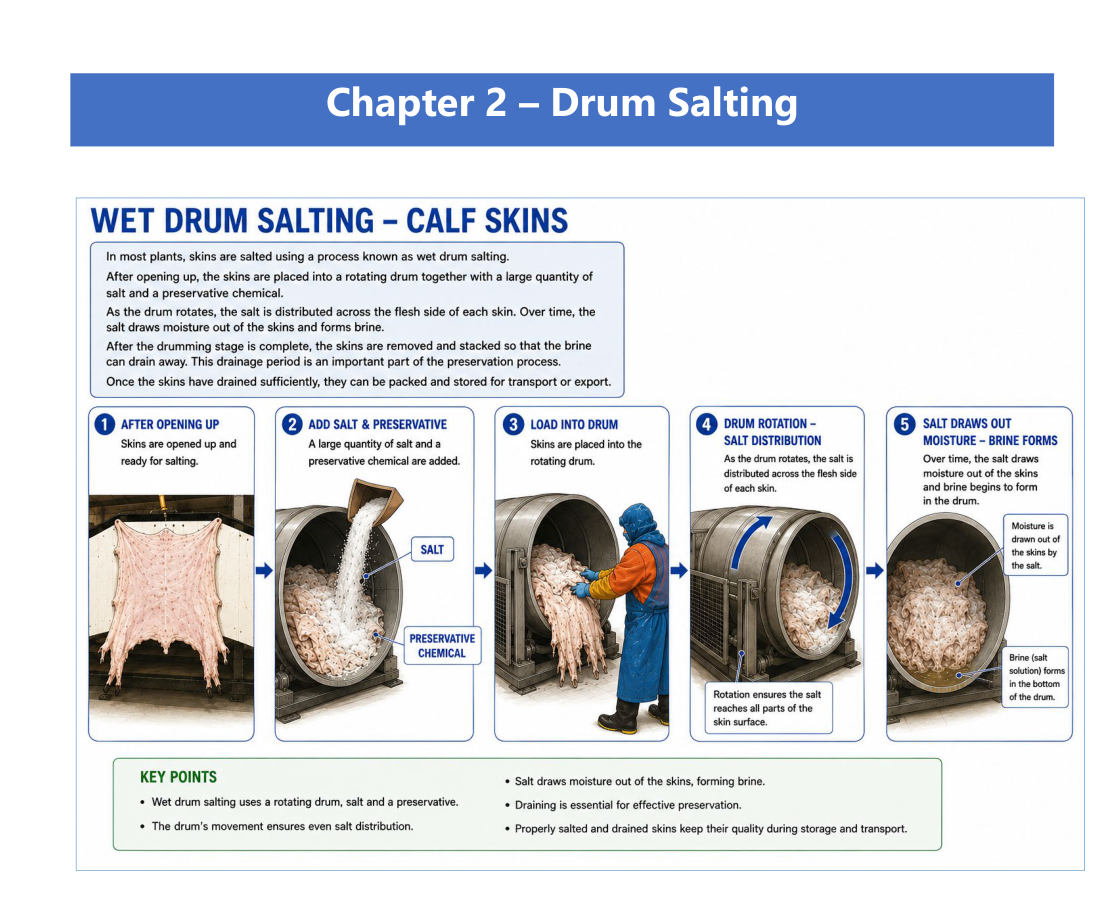
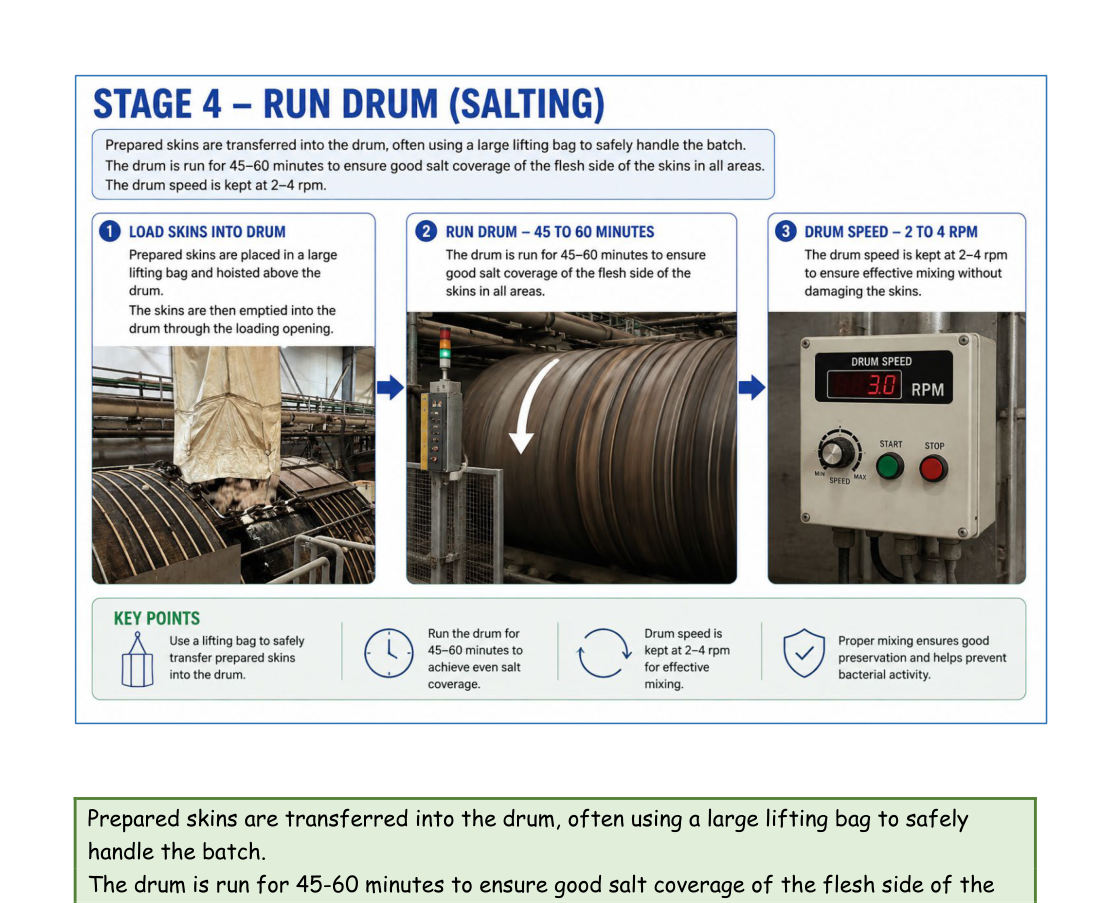
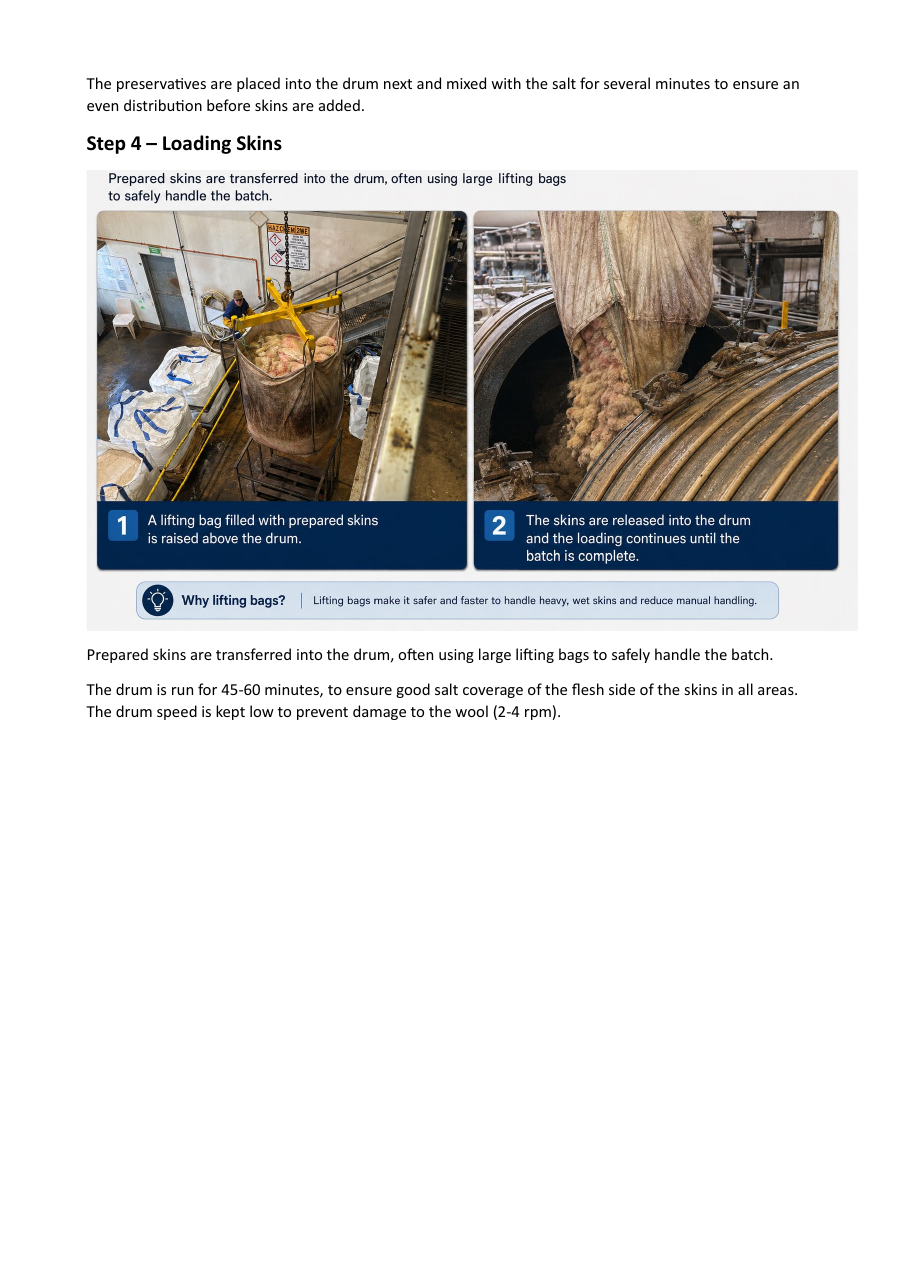
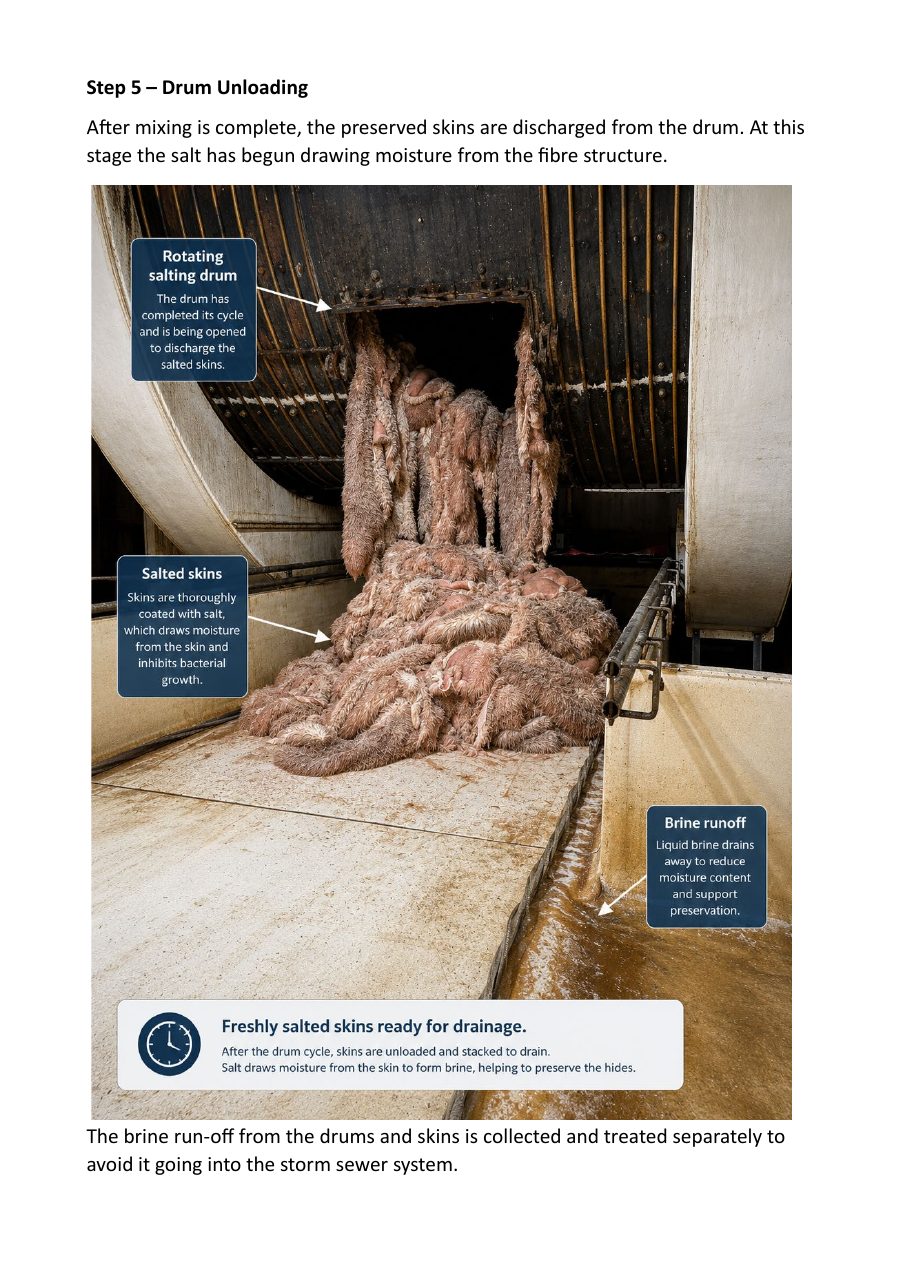
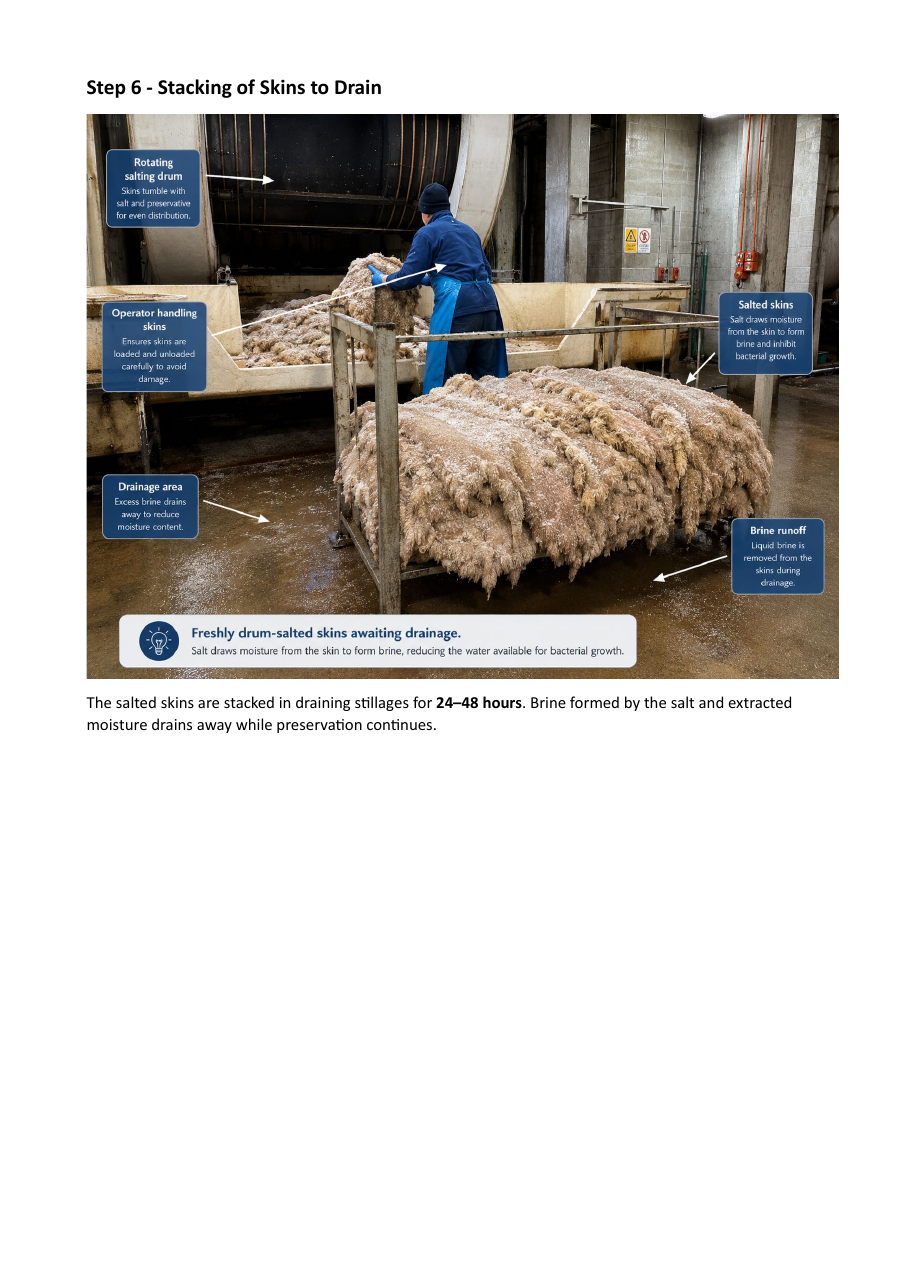
A photograph-led workplace course following the practical preservation of sheepskins from chemical preparation and loading through drum salting, unloading and drainage.
The material connects real plant operations with the reasons behind them: accurate dosing, even salt distribution, controlled drum action, brine removal and protection of wool and skin quality.
View course summary →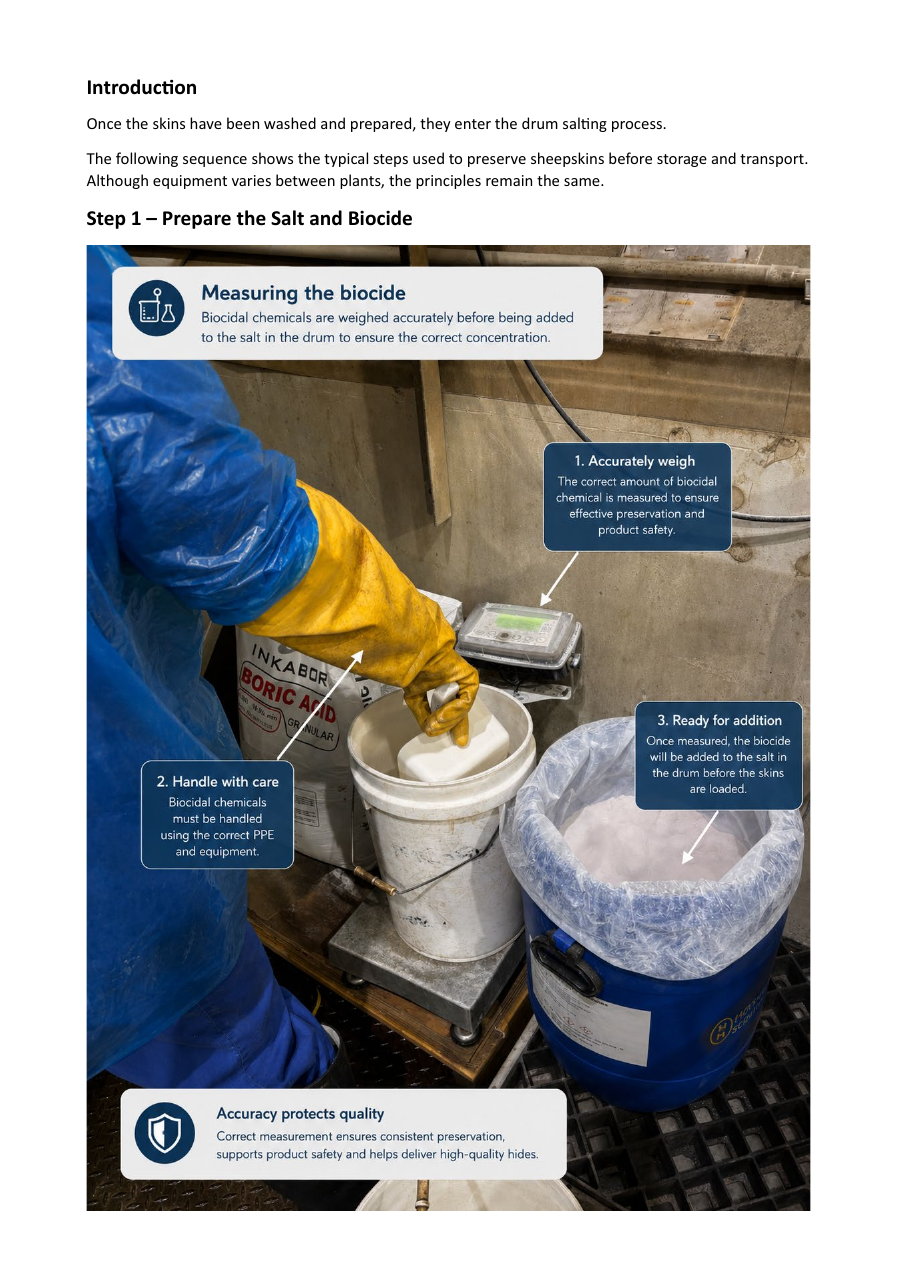
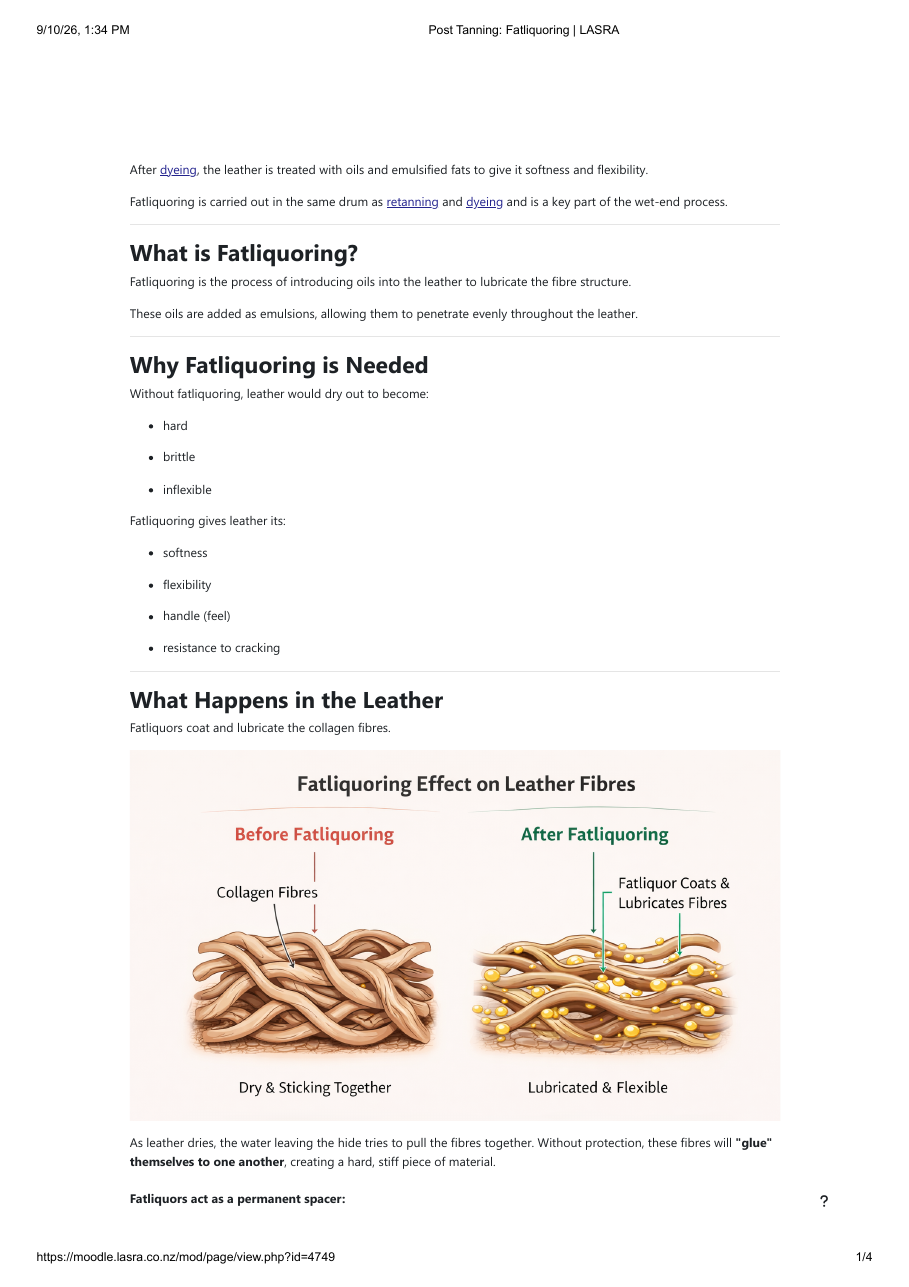
A connected introduction to neutralisation, retanning, dyeing and fatliquoring — showing how chrome-tanned wet blue is prepared, modified, coloured and lubricated during wet-end processing.
The emphasis is on process understanding: pH and penetration, fibre structure, article-dependent properties, dye fixation and the role of fatliquor in softness and handle.
View course summary →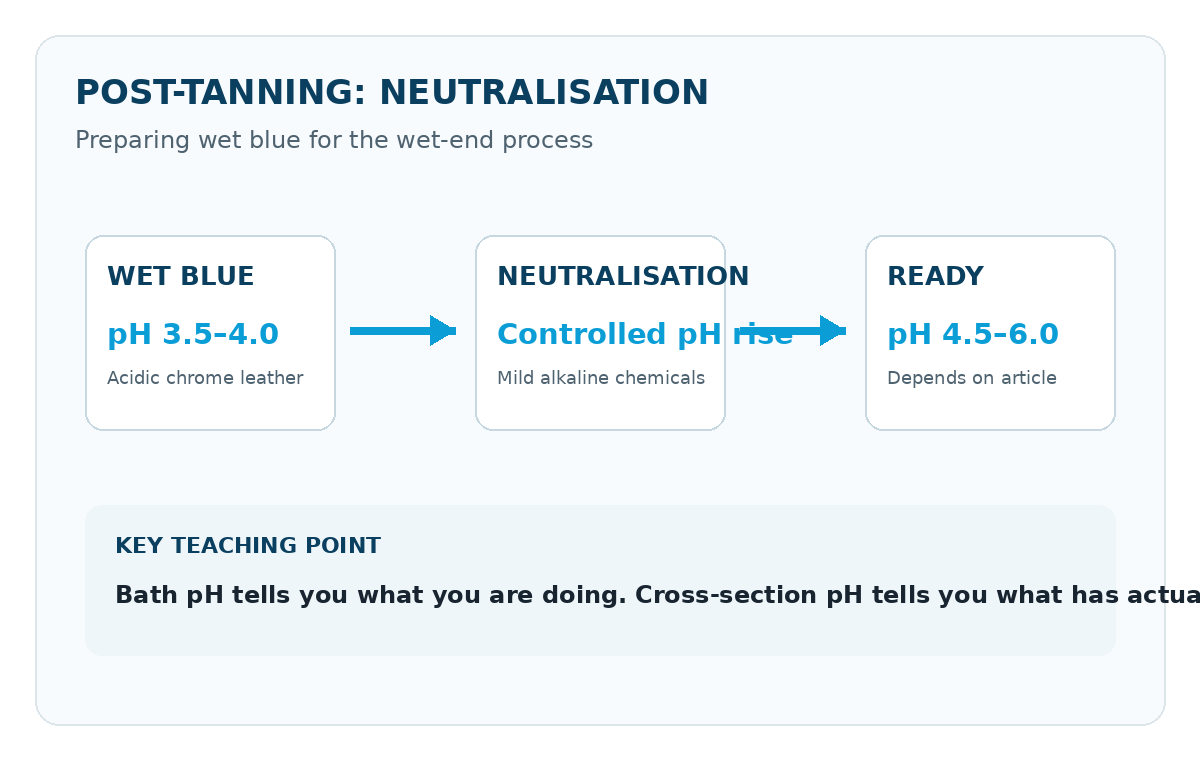


DEVELOPING FUNDAMENTALS RESOURCES
A practical introduction to hide structure, collagen, species variation and raw-material faults.
Preparing the hide for processing: rehydration, salt removal, process control, common faults and fleshing.
Keratin removal, sulphide chemistry, lime, swelling, fibre opening and safe process control.
LASRA's summary of the key technical capability and workforce issues identified through industry discussion.