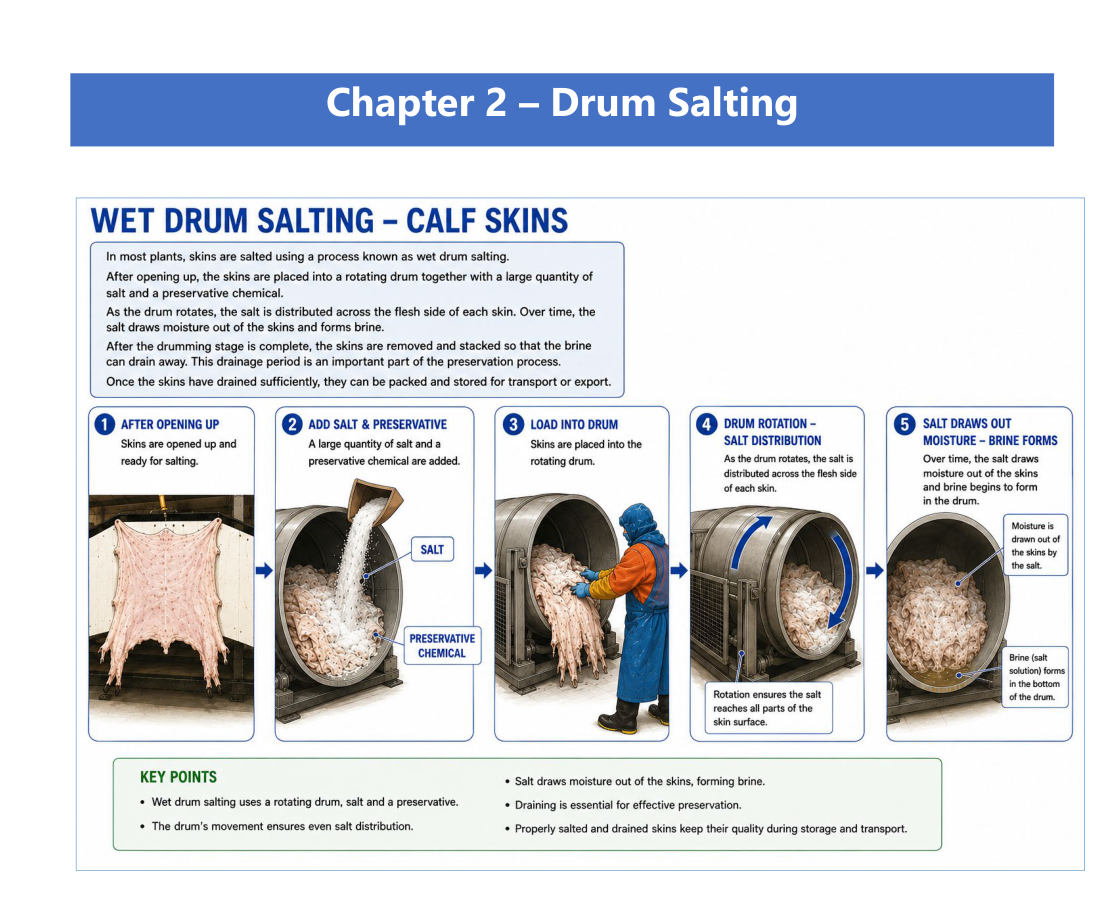
Wet drum salting
The complete operation: salt and preservative addition, drum action, brine formation, drainage and preparation for storage.
SHORT TECHNICAL COURSE
Practical training in raw-skin handling, preservation and preparation for storage or export.
FROM FRESH SKIN TO STABLE RAW MATERIAL
This LASRA course follows the calfskin from the first critical hours after removal through washing and cooling, preparation, wet drum salting, drainage, grading, packing and storage.
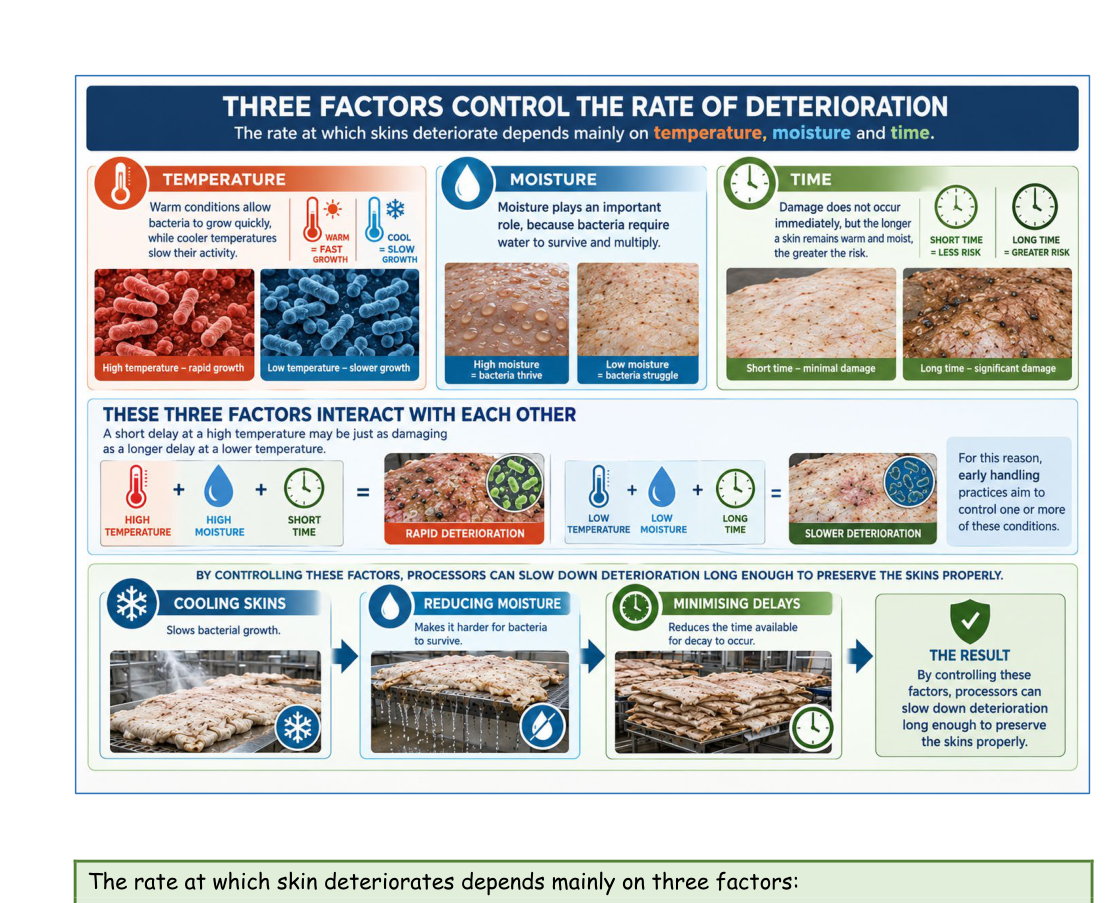
The emphasis is on understanding the process as well as carrying it out. Learners are introduced to bacterial deterioration, the effects of temperature, moisture and time, the role of salt and biocides, and the practical checks that protect raw-material quality.
A LOOK INSIDE THE COURSE
The complete operation: salt and preservative addition, drum action, brine formation, drainage and preparation for storage.
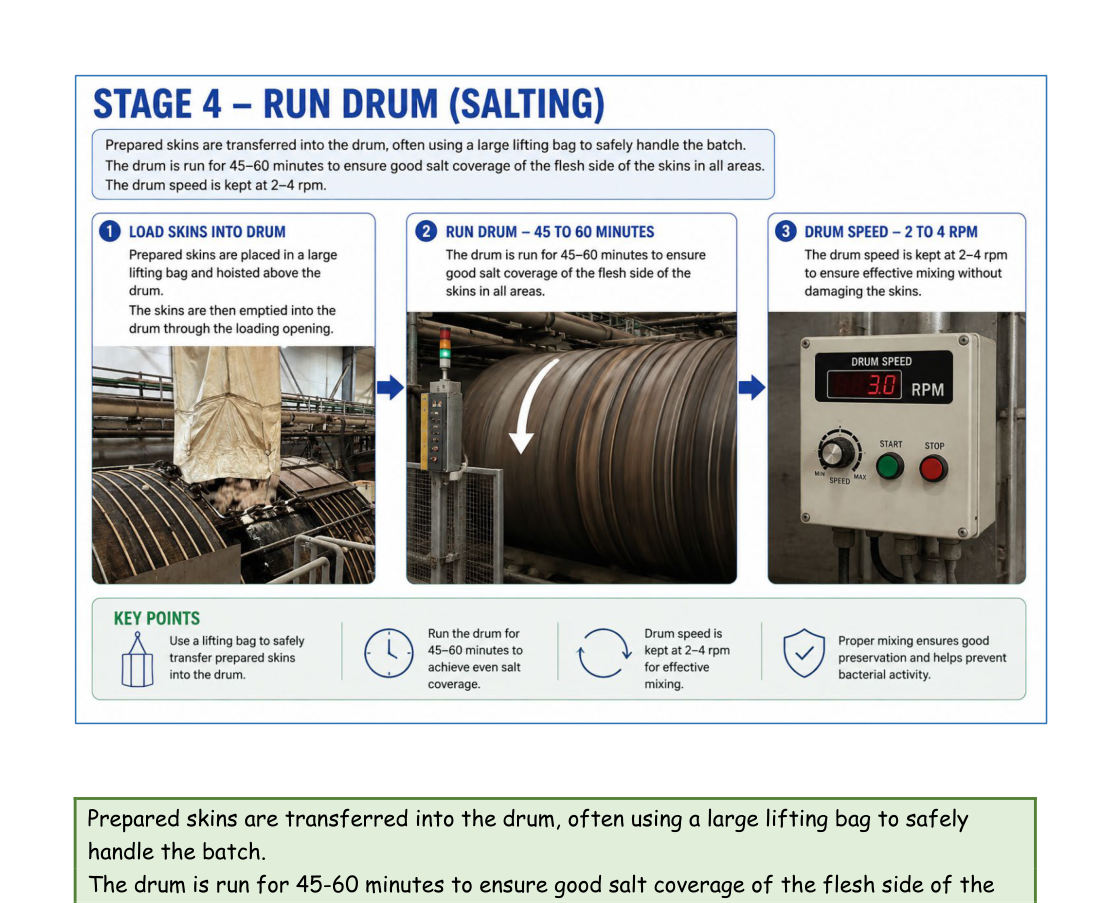
Practical operating parameters and the reasons good distribution and coverage matter.
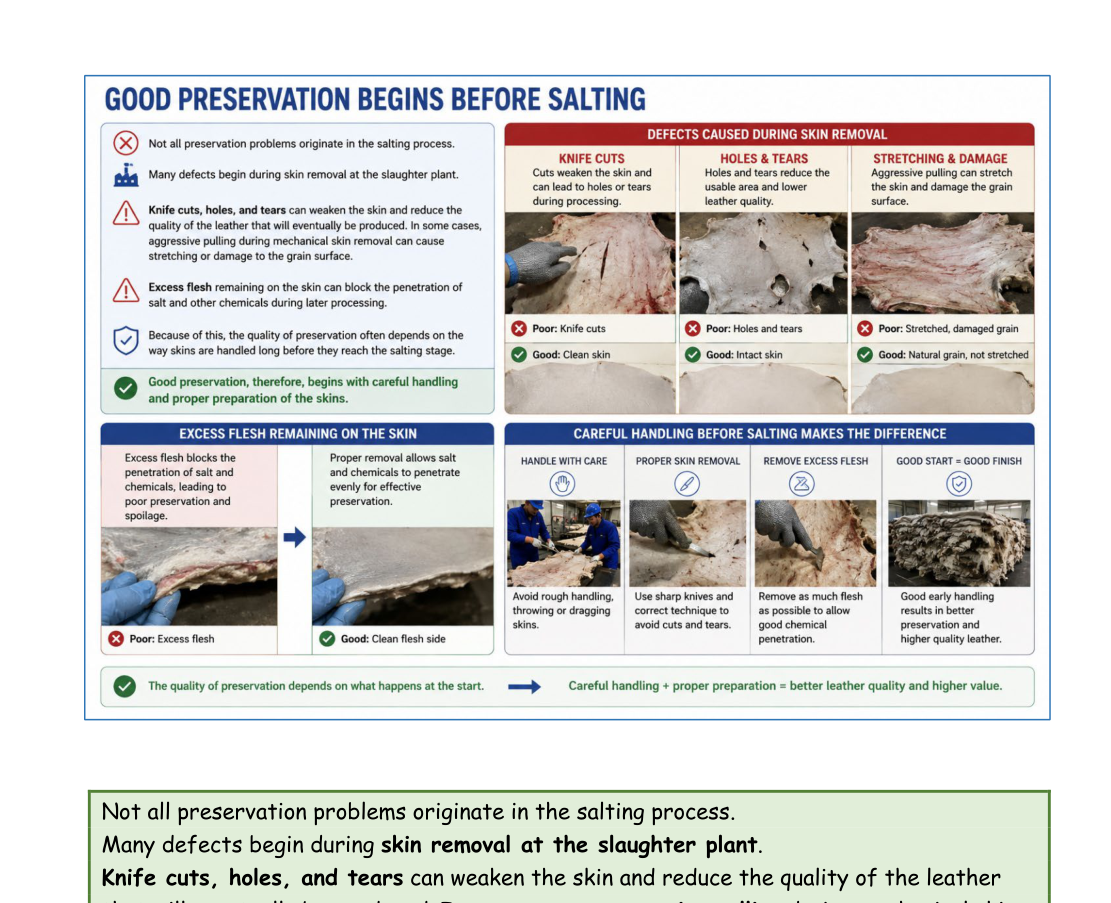
Knife cuts, pulling damage and excess flesh can reduce value or compromise preservation before salting begins.
Temperature, moisture and time are treated as interacting process variables rather than facts to memorise.
People involved in calfskin handling, washing, salting, storage, grading, packing, transport or quality assessment. The course is designed to support workplace learning and help operators understand how their decisions influence downstream leather quality.